%20(1).png)
Why is Parent Training So Important?

Parent Training
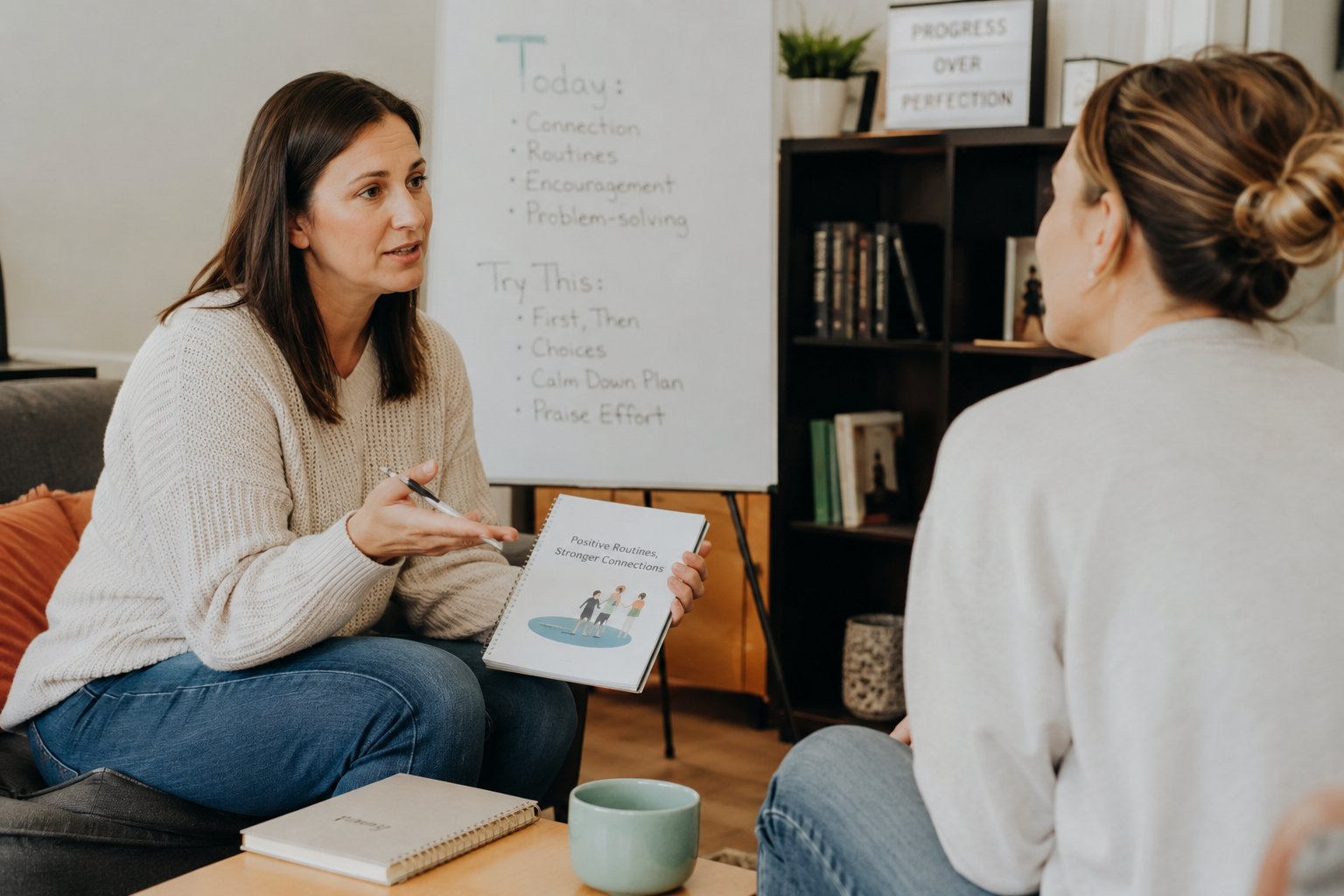
Sometime in the beginning of your ABA journey you will hear these two words. Across different companies and individual families, parent training will look a little different for everyone. This post is meant to be an introductory guide to parent training, why it is so important, the qualities of a good parent training session, and how you can maximize the benefits for your family.
What is Parent Training
Simply put, parent training educates caregivers on specific techniques they can implement at home. As a parent, you will learn the more about ABA and develop skills allowing you to contribute to your child's treatment in their day-to-day life. This is a little different from parent education, even though the terms are often used interchangeably. Parent education is typically more general. It may provide information about aba and how your child is doing, but not specific behavior management skills.
Karen Bearss, PhD and others conducted an interesting study showing the effect of parent training and parent education in children receiving ABA therapy services. Ultimately, the study showed that effective parent training is superior to parent education, but both are more beneficial compared to nothing. As a parent, dedicating time specifically for parent training and implementing the skills learned in your family will help your child have the best outcomes.
Benefits of Parent Training
There are many key benefits when parents participate in parent training and utilize the skills in their home.
- Learn to manage challenging behavior and high stress situations more effectively
- Foster better communication and understanding within the family unit
- Secure consistency over various environments
- Improve your child's independence and skill development
- Gain insight into what is being taught during your child's sessions
Qualities of a Good Parent Training Session
Parent training is usually conducted by the lead therapist assigned to your child. Sometimes an assistant could participate with direct oversight from the Lead BCBA. Training or parent education sessions will vary depending on your needs and the needs of your child. Even from session to session, you may see variance in the length of the session and material covered. Some things you could see are discussed below.
Goal Oriented
Parent training is goal oriented. Often, you will have specific things to work on and report back during the next parent training session. This will allow progress to be measured and see what can be improved.
Behavior Plan
This is the chance for the therapist to review the behavior plan and update you on how you child is doing during their treatment. They will go over the goals and progress they have made. You may be asked questions about how they are doing in the home, progress you have noticed, as well as other developments in their treatment outside of sessions. This is also the chance for you to ask questions, bring up skills or behaviors to include in the plan, and comment on any recent developments. Regularly reviewing the behavior plan will allow the therapist to design the most effect treatment for your child.
Education
Homework! The learning does not stop when we graduate, it is important to continually sharpen our mind. The therapist may assign reading, a podcast, or videos to enhance your education and provide clarity about the skills used.
Maximizing Parent Training Benefits
The more involved you are, the better the outcome will be! Parent training really is about what you put into it. Through your small, consistent efforts you will reap rewards overtime. Often progress is slow, and it may seem like you are not seeing any real benefit. You may even feel like you are wasting your time. Stick with it! Eventually as you look back, you will be able to see the fruits of your labors and the improvement in your child's treatment.
The best things you can do are
- Be involved in your child's therapy. The more involved the better opportunity for progress.
- Ask lots of questions, the more you know the better prepared you will be.
- Seek education through podcasts, videos, books, and online resources. Ask your therapist or reach out to us if you need help getting started!
- Stay consistent. Even when you make a mistake, acknowledge it as a learning opportunity and strive to improve in the future.
Parent training is not about you becoming a therapist. It is not meant for you to run 24/7 therapy sessions on your child or implement extreme expectations. You are still the parent, and being their parent is the most important role you will have in your child's life.
We are here to help you! Our goal at Sunshine ABA is to provide you the skills to allow you to be successful and gain confidence. One of my favorite quotes is "Frustration begins where knowledge ends." - Clinton Anderson. We don't want you to be dependent on therapy forever, rather, we want to see every child gain the independence and skills necessary to thrive in their day-to-day life. And we want to provide you with the knowledge and confidence to help them live up to their potential!
Continue exploring
Browse additional resources, practical guidance, and educational content related to ABA therapy, child development, and family support.

What Is Gold Vine Tutoring? A Family’s Guide to Individualized Academic Support

Gold Vine Parent Circle: Monthly Guidance and Personalized Family Support
One-on-One Parent Consultation: Practical Support for Everyday Parenting Challenges
Get the support your family needs
Take the first step toward personalized care, clear guidance, and meaningful progress for your child.
.svg)
.svg)